
Foxconn's business in India has grown to over $10 billion till 2024.

'We will start reaching out to researchers, academics, and experts on AI from top universities and companies from across the world.'

Intel India has joined hands with Indian Institutes of Information Technology at Bangalore and Roorkee to set up the first PlanetLab test-bed in India.
With most of the technical problems in delivering Internet connectivity over the electric power lines addressed, Intel Corporation is planning to start the user trials of the technology in India in the next few months.

The latest chips can deliver up to 15 per cent better performance than the previous generation, while consuming lower amounts of power.

The government has set a target of achieving 100 million broadband subscribers by 2014 as against 8.59 million users by the end of February 2010.
The move seen as recognition of India's growing prominence as a technology and research provider.
Intel Capital, the investment arm of Intel Corp, is seeking further investment opportunities to support its WiMax (Worldwide Interoperability for Microwave Access) strategy, since it believes the technology could shake up the wireless data market.

'No one manufactures intelligence at the moment.' 'This is a concept that your IT industry understands.' 'What you need is infrastructure. Everything else can then be taken care of.'
Company to bring in initiatives like biometric transactions to improve efficiency.

Intel Corporation chief operating officer Paul Otellini on Monday advised Indian CEOs in the information technology industry to accelerate Wi-Fi (wireless networking) adoption in order to continue its growth in a technology savvy global economy.

A computer with NPU can handle a wide range of tasks directly on personal devices without relying on a Cloud service.

WiMAX is generally said to deliver 70 megabits per second over 50 kilometers but can either operate at higher bitrates or over longer distances.
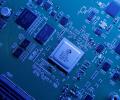
The Indian government is keen to woo major semiconductor players, but a global race to attract them to countries where there is already an ecosystem is making it difficult for India to attract the biggies in the business. On Wednesday the government decided to throw open the doors to more players to participate in its semiconductor scheme. It is now looking at not only 28 nanometre (nm) chips and below, but higher nodes like 40 nm.

Chipmaker Intel, which last week announced a partnership with watches and fashion accessory retailer Fossil Group to develop wearable devices, is scouting for manufacturers to launch such devices in India.
The exclusive club that dominates the global semiconductor fab scenario is about to get a new member. Taiwan, South Korea, and China control nearly 70 per cent of the global capacity. SEMI, the global industry body for semiconductor and electronics design and manufacturing, projects all fabs collectively will churn out 30 million wafers a month this year.

Apple's new MacBook Pro laptops and iMac with M3 chipsets will be available across 27 countries, including India, from November 7 onwards, according to an official statement. The company announced the launch of three M3 chipset models with built-in next-generation GPU architecture and a faster CPU with an eye on artificial intelligence use cases, gaming, entertainment professionals and other segments that need high-resolution image processing. The company has launched two variants of MacBook Pro laptops with 14 and 16-inch displays at a starting price of Rs 1.69 lakh and Rs 2.49 lakh, respectively.

Two full-fledged semiconductor fabrication plants are going to come up in India very soon entailing multi-billion dollar investment besides several chip assembly and packaging units, Minister of Electronics and IT Rajeev Chandrasekhar said. In an interview with PTI, the minister confirmed that the two projects include a $8 billion proposal submitted by Israel-based Tower Semiconductors and the other from Tata Group. "I am happy to share this with you and you are probably the first one I'm sharing this with.
India is all set to make its presence felt in the $47 billion global outsourced semiconductor testing and packaging market, an arena where Malaysia and Vietnam have been way ahead so far. The Cabinet last Thursday cleared two projects, the Tata's assembly testing and packaging plant (ATMP) and the Murugappa-owned CG Power with Renesas from Japan as its tech partner. These, together with Micron's assembly and testing plant which is already being constructed in Sanad in Gujarat, will collectively invest Rs 47,300 crore to set up the factories.
The aim was to provide inmates vocational training which they can use after their release.

Micron plans an assembly testing, marking and packaging project of $1 billion, and talks are on to set up a memory chip plant for captive requirements.

In June this year, the Bengaluru-based online marketplace has jumped into the fiercely competitive smart device market in India by launching its calling tablet for Rs 9,999.

I hope those who underestimate Rajeev Chandrasekhar will be proved wrong in this fight for Thiruvananthapuram's future, notes Rajeev Srinivasan.
India and Vietnam are vying with each other to woo semiconductor companies to their country. With the tension between the US and China escalating, and Taiwan getting vulnerable both countries are trying to present themselves as alternative destinations for global players. Vietnam, which started the effort as early as 2010, has got a leg-up after US President Joe Biden's visit last month.

OSAT majors have concerns about India's ability to provide a stable, predictable, and lasting policy environment for years to come, which is key for making a decision in a capital-intensive business.
Is self-reliance the right approach in a mega-buck game, or better to be part of a network? asks T N Ninan.

In the technology (tech) world, especially storage, Sanjay Mehrotra is a well-known name. Co-founder of SanDisk, a flash memory storage company in 1988, it was eventually acquired by Western Digital in 2016 for a whopping $19 billion. For a boy from Kanpur, who went on to pursue higher studies in the US, becoming the chief executive officer of Micron Technology, Inc - one of America's largest memory chip makers - and now setting up the company's first plant in India, it has been quite a ride.

Will open radio access network technology (O-RAN) disrupt the way 5G networks roll out in the country? After all, it promises to offer a substantially lower capital cost, enables the choice of an array of vendors, and provides more network flexibility - all very important for telcos who expect to invest over Rs 60,000 crore to roll out a pan-India 5G network and that's without spectrum costs. But more importantly, it counters the stranglehold of global telecom gear makers such as Ericsson, Nokia, and Samsung over telcos to whom they sell propriety technology and bundled hardware and software.

Whether Rajeev Chandrasekhar wins or not, Thiruvananthapuram will likely never see such an interesting contest again.

Indian plants -- who plan to begin production with 28 nano metre chips -- will take two to four years to get off the ground. By that time, in the fast changing world of chip making, the global market would have shifted to 22 nm.

If left unchecked, the 2024 elections may be infamously remembered as the election of deepfakes. The ECI has a tough task ahead, but, more importantly, it has an opportunity to become a global model for scores of countries going to polls this year, notes Ajay Kumar.
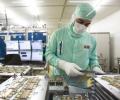
Mumbai-based Indian Semiconductor Manufacturing Company (ISMC) and Singapore-headquartered IGSS Ventures have one strategy in common: They have told the government in their application for semiconductor fabrication plants that they will export the bulk of the chips they make in India in the initial five or 10 years. The third applicant, Vedanta-Foxconn, which is also building a fab plant, has said it will concentrate on the needs of consumer electronics and mobile device markets, and earmark 80 per cent of output for domestic consumption, but has not specified its customers. Finding a viable domestic market could well be the biggest challenge for India's renewed tryst with semiconductors. Fab plants do not sell directly to end users but to intermediary chip design companies - such as Qualcomm or MediaTek.

Apple's newest phone iPhone 14 will be made in India as the global tech titan bets big on the manufacturing prowess of the world's second-biggest smartphone market after China.

"China creeps towards hegemony in Asia, threatens India's borders, and treats other countries as junior partners, Indian-American Congressman Ro Khanna said.
Even though India has major strengths in chip design and in making the software that actually commands the processors to execute specific tasks, chip-manufacturing has never been the country's strength.

FMCG giant Unilever CEO Paul Polman and technology major Intel President Renee James on Tuesday met Prime Minister Narendra Modi as a slew of global corporatehonchos continue to line up to express their intention to invest in India.
